


For many Malaysian households, boiling tap water has long been considered a simple and reliable way to make drinking water safer. While boiling remains an effective method for killing certain microorganisms, modern water quality concerns have raised an important question: is boiling alone enough to ensure truly clean drinking water?
As water travels through treatment facilities, distribution systems, and household plumbing, it can encounter various contaminants that boiling may not eliminate. Understanding the differences between boiled water and filtered water can help homeowners make informed decisions about their family’s daily water consumption.
Why Do People Boil Water?
Boiling water is one of the oldest and most widely used methods of water treatment. When water reaches a rolling boil, the high temperature can destroy many harmful microorganisms, including bacteria, viruses, and parasites.
Common reasons people boil water include:
- Eliminating biological contaminants
- Improving water safety during emergencies
- Reducing the risk of waterborne illnesses
- Following traditional household practices
For generations, boiling has served as a practical solution for improving water safety. However, modern water quality challenges extend beyond microorganisms alone.
What Boiling Water Can Remove
Boiling is particularly effective against living organisms that may be present in untreated or contaminated water.
It can help eliminate:
- Bacteria
- Viruses
- Parasites
- Certain disease-causing microorganisms
This makes boiling an important emergency treatment method, especially during water supply disruptions or contamination incidents.
However, while boiling can address biological threats, it does not remove many non-living contaminants commonly found in modern water systems.
The Limitations of Boiled Water
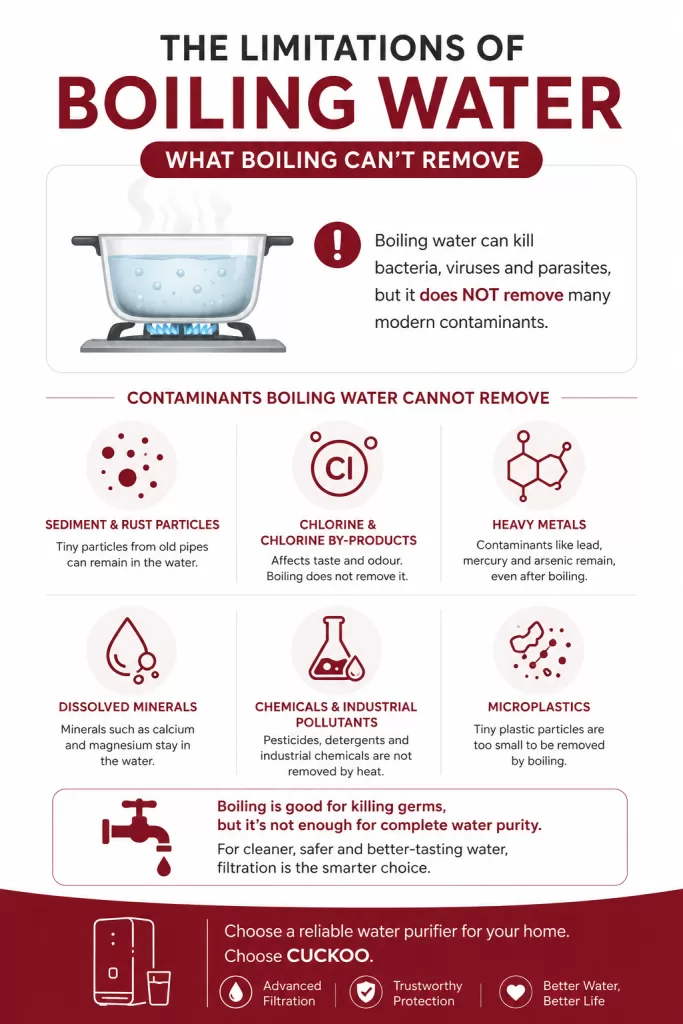
One common misconception is that boiling water removes everything that may be present in the water supply. In reality, boiling only targets microorganisms.
Many contaminants remain even after the water has been boiled, including:
- Sediment and rust particles
- Chlorine and chlorine by-products
- Heavy metals such as lead or mercury
- Dissolved minerals
- Certain chemicals and industrial pollutants
- Microplastics
In some cases, boiling may even concentrate certain contaminants as water evaporates during the boiling process.
For households concerned about overall water quality rather than just bacteria, additional treatment methods may be beneficial.
How Filtered Water Works
Filtered water passes through specialised filtration systems designed to remove a broader range of contaminants.
Depending on the filtration technology used, modern water purifiers can help reduce:
- Suspended particles and sediment
- Chlorine and unpleasant odours
- Heavy metals
- Certain chemicals
- Microplastics
- Some bacteria and viruses
Different filtration technologies target different contaminants. Common systems include activated carbon filters, ultrafiltration, reverse osmosis, and multi-stage filtration systems.

Why Water Quality Matters Beyond Safety
Clean water supports more than hydration. The quality of the water consumed daily can influence various aspects of household wellness.
Benefits of high-quality drinking water may include:
- Better-tasting beverages and food
- Increased confidence in daily water consumption
- Reduced reliance on bottled water
- Improved convenience for families
- Enhanced peace of mind regarding water quality
For families with children, elderly individuals, or health-conscious households, water quality often becomes an important consideration when evaluating home wellness solutions.
Which Option Is Better for Your Household?
The answer depends on your household’s priorities and water quality concerns.
Boiling water may be suitable if your primary concern is eliminating microorganisms during temporary situations.
Filtered water may be more suitable for households looking for a comprehensive approach to water quality, including the reduction of particles, chemicals, odours, and other impurities.
Factors to consider include:
- Family size
- Daily water consumption
- Water taste preferences
- Local water conditions
- Convenience requirements
- Long-term costs
Many modern households prefer filtration systems because they provide immediate access to purified drinking water without the need for repeated boiling and cooling.
Boiled Water vs Filtered Water: Quick Comparison
| Feature | Boiled Water |
Filtered Water |
| Removes bacteria and viruses | Yes | Depends on filtration technology |
| Removes sediment and particles | No | Yes |
| Reduces chlorine taste and odour | No | Yes |
| Removes heavy metals | No | Many systems can reduce them |
| Removes microplastics | No | Certain filtration systems can |
| Improves taste | Limited | Yes |
| Ready for immediate consumption | No cooling required after filtration | Yes |
| Energy consumption | Requires repeated boiling | Minimal after installation |
| Daily convenience | Lower | Higher |
| Long-term household solution | Limited | More comprehensive |
Conclusion
Boiling water remains an effective method for killing harmful microorganisms, but it does not address many of the contaminants that concern modern households today. As awareness of water quality continues to grow, more homeowners are looking beyond boiling and exploring filtration systems that offer broader protection and greater convenience.
Whether your goal is improving taste, reducing unwanted impurities, or supporting a healthier lifestyle, understanding the difference between boiled water and filtered water is an important first step toward making an informed decision.
For households seeking a convenient and comprehensive water solution, a trusted CUCKOO Water Purifier Malaysia system can provide access to cleaner, better-tasting water every day. If you are exploring water purification options in the capital city, consulting a CUCKOO specialist can help you identify a solution that best suits your household’s needs and daily water consumption habits.
Frequently Asked Questions
Is boiled water enough to make tap water safe to drink?
Boiling water effectively kills bacteria, viruses, and parasites, making it safe for emergency situations. However, it does not remove chemical contaminants, heavy metals, or microplastics that may still be present in tap water.
What are the main limitations of boiled water?
Boiled water cannot remove non-biological impurities such as chlorine, rust particles, dissolved chemicals, heavy metals, and certain pollutants. In some cases, boiling may even concentrate these substances as water evaporates.
Is filtered water better than boiled water?
Filtered water generally provides more comprehensive purification. Depending on the system used, it can reduce sediments, chlorine, odours, heavy metals, and even microplastics, offering broader protection compared to boiling alone.
Is tap water in Malaysia safe without boiling or filtering?
Malaysia’s treated water generally meets safety standards at treatment plants. However, water quality can change due to ageing pipes, building storage tanks, and household plumbing conditions before it reaches your tap.
How can I choose the right water solution for my home?
It depends on your household size, water usage, and quality concerns. For personalised recommendations, you can consult a local specialist such as a CUCKOO Kuala Lumpur specialist to assess your needs and recommend suitable systems.